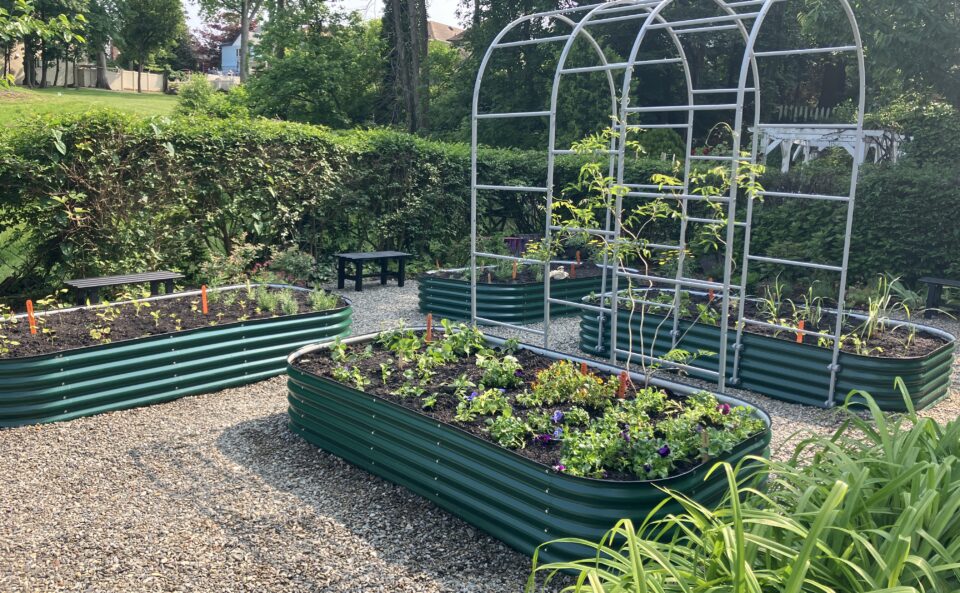
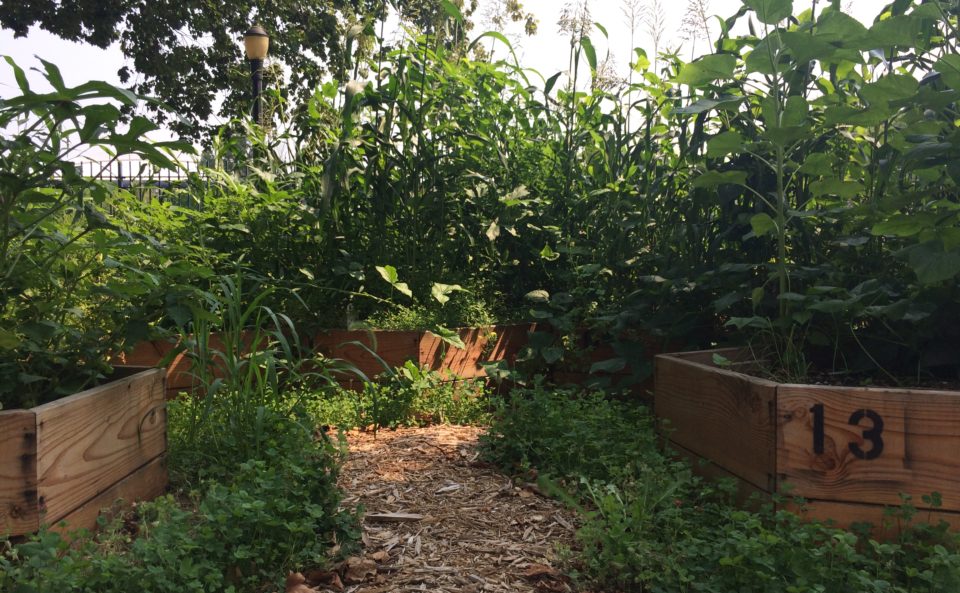
Alice Austen, the founder of the Staten Island Garden Club, took pride and comfort in her garden, using it as a photographic muse and a safe space for her companions. The garden provided a literal and symbolic escape from the strict Victorian mores imposed on women and LGBTQ+ identifying individuals at the time.
This garden program will provide a based meeting hub within the park, bringing together students from across Staten Island to create pathways for students to learn about careers in horticulture, parks, and museums, building upon existing LGBTQ+ Photographic Storytelling programs at the Alice Austen House.
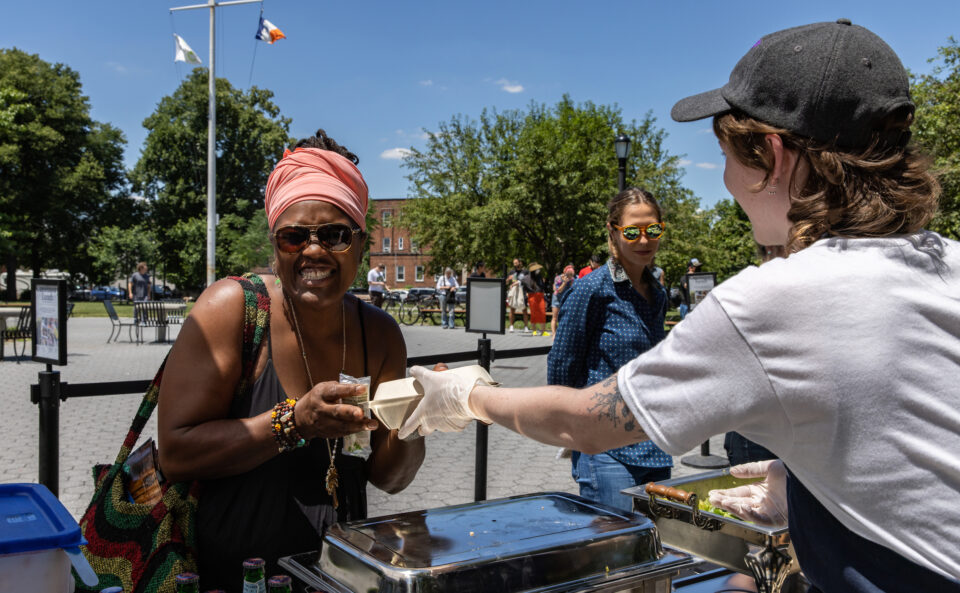
From 2021 – 2023, I collaborated with chefs, Red Hook Farms, FIG and community partners to program free community lunches in Coffey Park in Red Hook, Brooklyn.
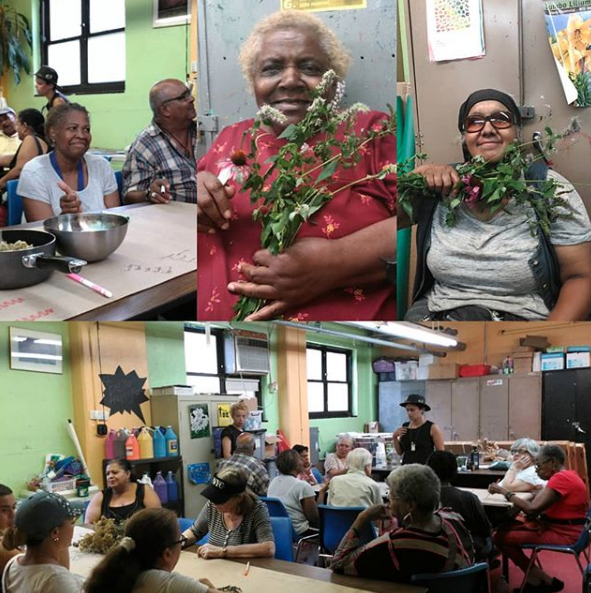
Community Lunch was created to build community across identities with a priority focus on the residents who have been taking care, organizing, and holding down Red Hook for many years. Its fabric is made up of predominantly Black, Latinx, and Chinese residents in the neighboring NYCHA housing.
This event aims to work alongside and learn from the local organizations that have implemented solutions to food insecurity in an area that’s largely considered a food desert. We aim to contribute to their existing efforts aimed at achieving food sovereignty.
Everyone is welcome! We kindly ask you to take care when pulling up. Wait to get in line, introduce yourself to a stranger, make your neighbor a plate, and make space so there’s room for everybody.”
image by Walter Wlodarczykimage by Walter Wlodarczykimage by Walter Wlodarczykimage by Walter WlodarczykChinchakriya Un; Kreung, image by Walter Wlodarczyk
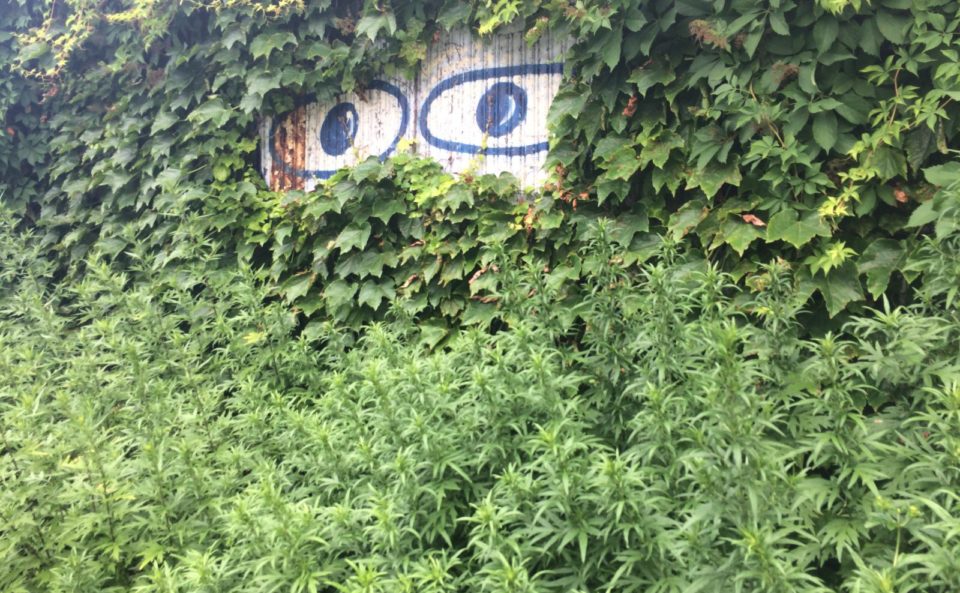
Volunteer plants penetrate harsh landscapes, thriving under conditions of poor soil and post-industrial waste. These spontaneous plants blanket spaces of transition by creeping into slivers of dirt and emerging year after year, far from their places of origin. Wild plants are often labeled as “weeds” or “invasive,” yet, they are opportunists that queer the urban landscape.
How can we change our thinking and actions to acknowledge and work with ecological life cycles?
The Ecologies of Transition Roundtable is a series of workshops for discussing how ecological long-term thinking can be applied to design and daily life. The series is grounded in sharing and reflecting on methods for noticing how humans and natural matter shape urban ecology. Sessions feature activists, designers, and artists engaging in regenerative ecological practices: capturing carbon in soil, turning organic waste into compost, and maintaining waterways to accommodate rising tides.
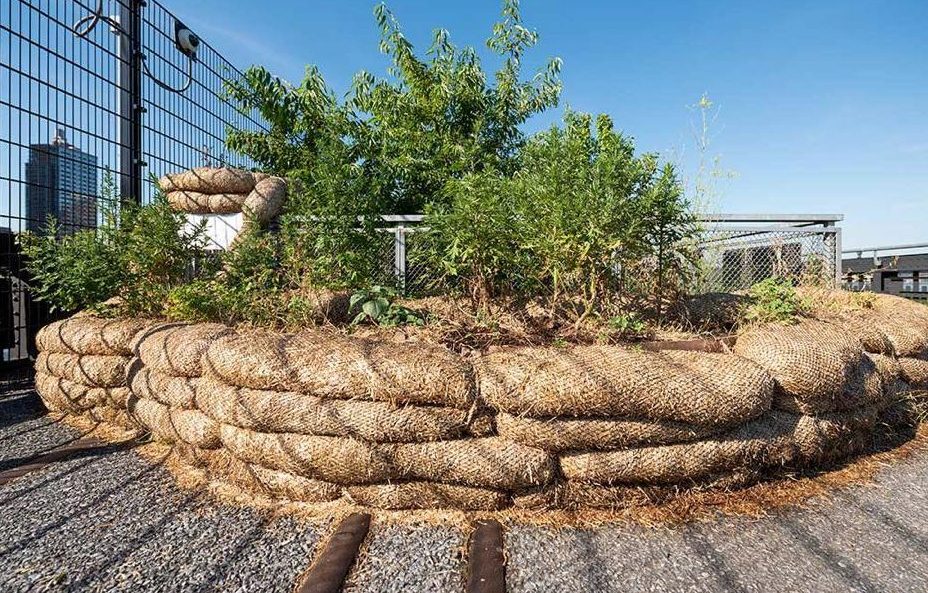
How can we cultivate soil to be a sink for carbon and, in turn, a source to fight the climate crisis? Initiated by artist Brooke Singer, Carbon Sponge is a multisite series of gardens built to measure carbon sequestration, a process where carbon accumulates in soil instead of being released into the atmosphere. Join us for this hands-on roundtable to discuss and discover practical steps we can take to help sequester carbon.
Human bodies, a cantaloupe, grass clippings. All share important functions—they live, die, and can turn into compost. With new legislation passed in Washington State, human bodies can now be composted in aboveground facilities. What can we learn from a world where relationships between fungus and fruit are happily encouraged? A world where a half-eaten head of lettuce becomes food for chickens, rather than spending the rest of its days off-gassing in a landfill? Join us on Governors Island to explore tactics for recycling organic waste—food scraps from the island—into rich compost with Marisa DeDominicis of Earth Matter. This roundtable session will be part discussion and part hands-on compost-sifting and seed starting at Soil Start Farm and the Compost Learning Center.
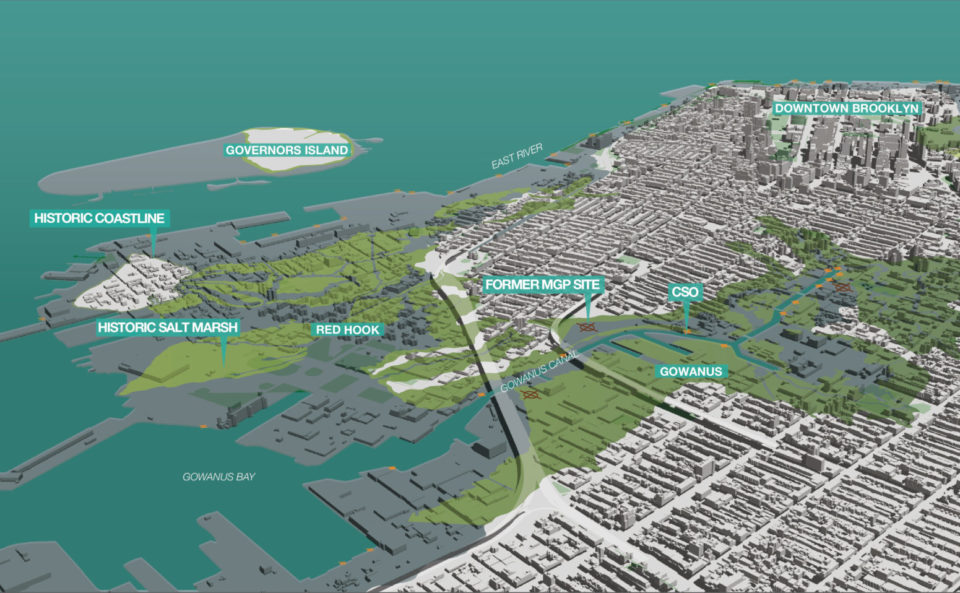
Hydrological Ties that Bind—Gowanus and Red Hookwith Gowanus Canal Conservancy and Resilient Red Hook November 12, 2019 at Pioneer Works
In the low-lying coastal region of New York City, we are never more than a few miles away from the waterfront. Along the edges of Brooklyn’s coastlines, neighborhoods are being rezoned, flooded, and dredged. Red Hook and Gowanus share a water source, a sewershed, and gaps in policy that should protect the land and its inhabitants. Working together as civic, cultural, and ecological bodies who live, work, and play near the Gowanus Canal and on the Red Hook waterfront, can we recreate an integrated neighborhood plan? Can we build resilience in times of sea level rise, erratic precipitation, and overflowing sewer systems? Join us in this roundtable to hear from the Gowanus Canal Conservancy and Resilient Red Hook about current issues and planning in each neighborhood, and to collaborate on identifying advocacy issues that will help shape a Green New Deal that includes us all.
This plant walk and listening session was a collaboration with plants on occupied territory of the Oneida Nation at the Rogers Environmental Education Center in Sherburne, NY. Participants sat with, listened to and drank tea from White pine, Eastern red cedar and Northern white cedar. Human participants were invited to share wisdom and knowledge of relationships with these plants, their medicinal qualities and spiritual uses in their own cultures.
Workshop at Grafters X Change: Branches and Networks, March 29-30 2019 at Colgate College
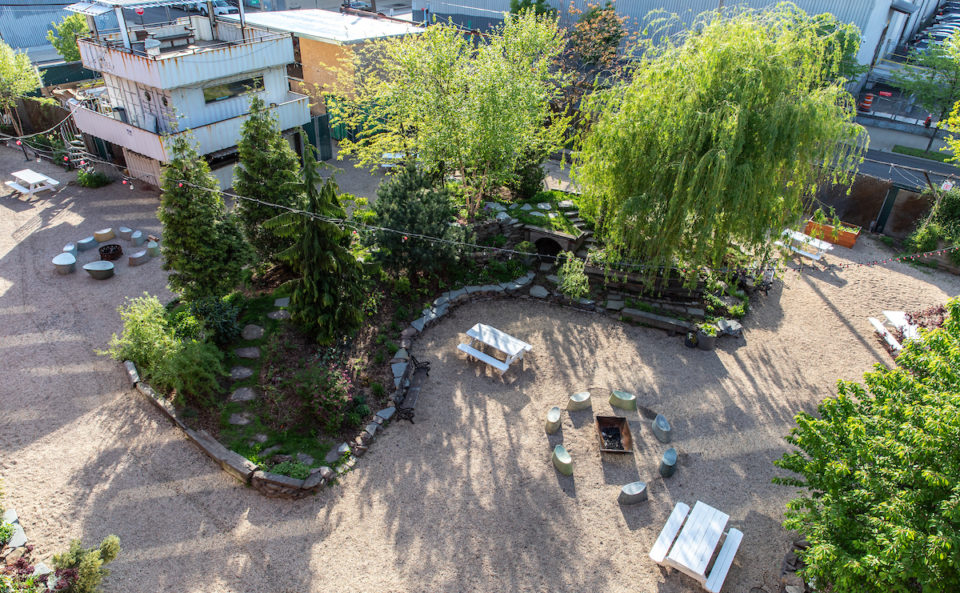
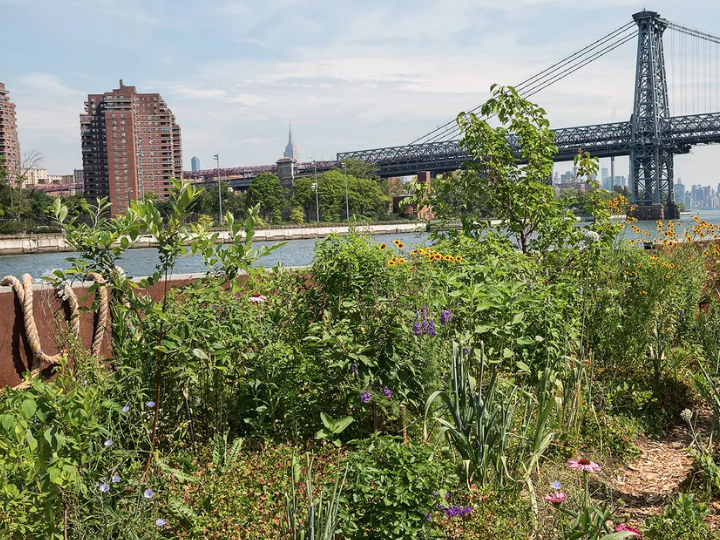
A ½ acre garden at an arts nonprofit in Red Hook, Brooklyn. One block from the Buttermilk Channel branch of the New York Harbor, the landscape is built atop an old concrete parking lot, and in constant transition towards a salt marsh. The space is home to ecology-focused programs and artworks created in collaboration with artists-in-residence at Pioneer Works.
A series of collaborative projects exploring multi-species ecologies, pedagogies and the history of plant-based craft by initiating trans-disciplinary methods for walking between physical and digital realms, to heal bodies & minds in the information age. Collective members designed interdisciplinary workshops for un-learning with plants, created lo-fi branding and marketing materials and produced a series of herbal elixirs from 2013 – 2017.
Weeds as wellness workshop; Seeds of Change: New York–A Botany of Colonization, Pioneer Works, Brooklyn, New York, 2018.
Seeds of Change – New York, A Botany of Colonization, The New School Arnold and Sheila Aronson Galleries, Sheila C. Johnson Design Center, Parsons School of Design, New York, 2017. photo by Allison Meier.
Seeds of Change – New York, A Botany of Colonization, The New School Arnold and Sheila Aronson Galleries, Sheila C. Johnson Design Center, Parsons School of Design, New York, 2017. photo by Allison Meier
Seeds of Change – New York, A Botany of Colonization, The New School Arnold and Sheila Aronson Galleries, Sheila C. Johnson Design Center, Parsons School of Design, New York, 2017. photo by Allison Meier
Seeds of Change – New York, A Botany of Colonization, Agora, The High Line, New York, 2018. photo by Timothy Schenck
A Ballast Flora Garden, Seeds of Change – New York, A Botany of Colonization,Pioneer Works, Brooklyn, New York, 2018. photo by Walter Wlodarczyk.
A Ballast Flora Garden, Seeds of Change – New York, A Botany of Colonization,Weeksville Heritage Center, Brooklyn, New York, 2018. photo by Maria Thereza Alves.
Seeds of Change – New York, A Botany of Colonization is a project by artist Maria Thereza Alves that explores colonialism, slavery and global commerce through the lens of displaced plants in ballast, the waste material historically used to balance ships in maritime trade. In 2017, I consulted with the Vera List Center for Art and Politics to research, propagate and maintain an installation of ballast flora for an exhibition of the project at the Parsons School of Design Arnold and Sheila Aronson Galleries. In 2018, I designed and implemented Seeds of Change – New York, A Botany of Colonization; A Ballast Flora Garden in three partner locations; on the High Line’s Western Railyards at 30th Street as part of Agora, at the Weeksville Heritage Center, and at Pioneer Works. This work included co-designing and leading hands-on workshops, events and programs; including a series of weed walks focusing on each site entitled; Wild Plants, Queer Landscapes, a Lunchtime Reading Session on the High Line and a Summer Youth Garden Program at Pioneer Works. 2017 – 2018.
Swale is a 5,000 square foot floating food forest, built atop a barge that travels to public piers in New York City. It is an autonomous zone on the water where folks can visit to harvest herbs, fruits and vegetables from the gardens for free. Since 2016, I have partnered with founding artist Mary Mattingly and an incredible team of collaborators to design, build, maintain and learn from plants on the barge. It is a site for performances, projects, panels, events and meetings, an outdoor classroom, calling attention to waterways as a commons in New York City. My work on Swale includes helping manage the networks of polyculture gardens growing on the barge, implementing educational programs at the intersections of wellness, arts and urban ecology for folks of all ages, leading weekend tours and walks and bringing groups of NYC school students aboard.
How do we make space for a continuum between human and non-human others, setting intentions beyond binaries and towards integrative spectrums? What can we glean about our city from its messy edges where buildings crumble while rats, weeds, and trash piles thrive?
A series of workshops involving actions and writings that embodied learning and healing practices for the urban Anthropo-Plantationo-cene. Sessions focused on the exploration of radical place-based actions for building solidarities with land– following Donna Haraway’s instance of naturecultures; in which the two terms cannot be separated. Session happened in streets and vacant lots of Red Hook, touching plants and reading suggested texts in collaboration with andrea haenggi, Zeelie Brown and Ellie Irons, as well as with darren patrick and Jane Bennett.
A hands-on herbal medicine workshop for Juanli Carrion’s Outer Seed Shadow project at the Marble Hill Terrace garden in the Bronx, NY, Summer 2018, led with Kendra Ellis.
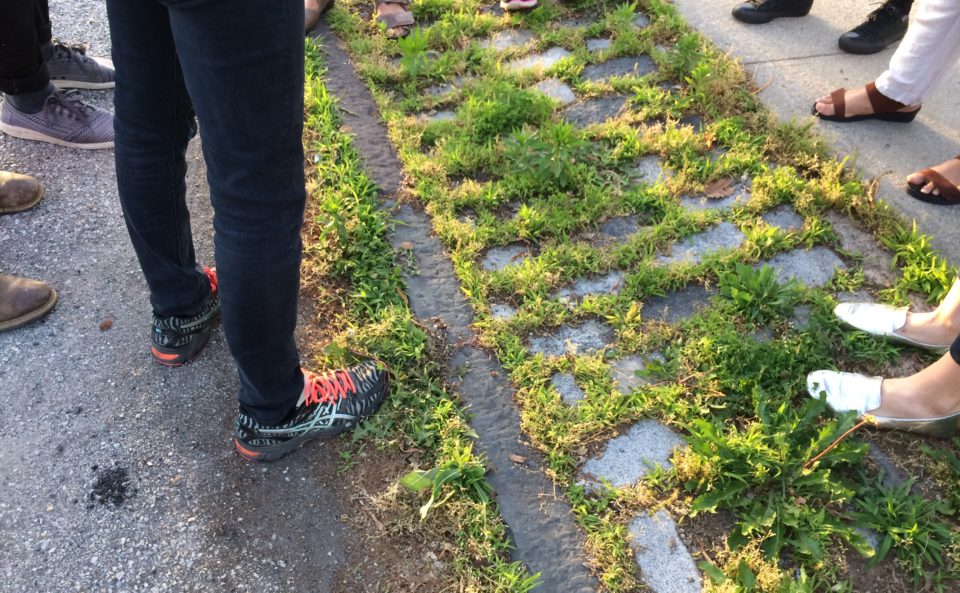
As part of the Vera List Center Prize for Art and Politics 2016-2018 and as an extension of the exhibition Maria Thereza Alves, Seeds of Change: New York—A Botany of Colonization, WILD PLANTS, QUEER LANDSCAPES is a series of weed walks that explore the connection between Maria Thereza Alves’ work and the New York City landscape. Each walk explored a site relevant to the movement of ballast through New York City’s ports; at the Western Rail Yards of the High Line, where gardeners left “existing self-seeded plantings, celebrating the urban landscape that emerged on the High Line after the trains stopped running in 1980,” a one-mile walk collecting seeds around the site of the Weeksville Heritage Center (James Weeks was an African American stevedore who purchased the land in 1838) in Crown Heights with artists Andrea Haenggi and Ellie Irons of the Environmental Performance Agency, and a walk exploring the former ballast dumping site of Atlantic Basin in Red Hook, where many salt-loving marshland plants thrive in cracks along sidewalks and beneath sewers.